What Should a Planned Preventive Maintenance Checklist Include? A Guide for Nigerian Buildings
A plan on paper isn't enough. Use this planned preventive maintenance checklist for Nigerian buildings, plus four rules that get the work done.

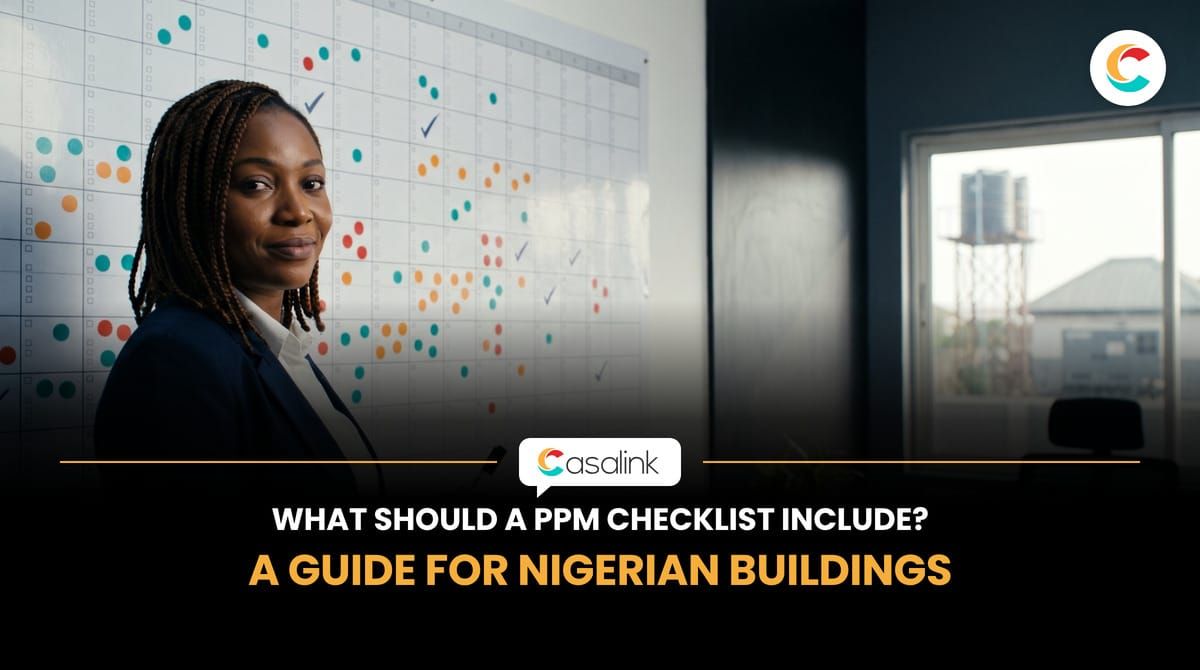
Every estate or facility management office needs a maintenance schedule. It could be a spreadsheet, a printed calendar pinned to the office wall, or a list of tasks kept by the maintenance supervisor.
The generator is due for servicing. The water pump needs checking. The overhead tank needs cleaning, and the lift contractor is expected next week.
But having these tasks written down doesn't necessarily mean they're getting done.
A generator could run for weeks without the required service. A pump could develop a fault that goes unnoticed, while a technician's report from the last maintenance visit remains buried in an old WhatsApp conversation.
For facility managers handling estates, offices, plazas and warehouses, keeping track of all these activities can become difficult, particularly when several buildings and assets are involved.
A planned preventive maintenance checklist helps organise the work. More importantly, it gives your team a way to track what needs attention, who is responsible, and whether each task has actually been completed.
This guide covers the essential checks for common building assets and four practical ways to make sure your maintenance schedule works beyond the spreadsheet.
Quick answer: A planned preventive maintenance checklist lists every asset in your building, the tasks each one needs, and how often: weekly, monthly, quarterly and yearly. It only works when each task has a named owner, is issued as a work order on its due date, and is closed with proof, such as photos or a service report.
What is planned preventive maintenance?
Planned preventive maintenance (PPM) is the routine inspection, servicing, and maintenance of equipment before it develops a fault or breaks down.
For example, you service a generator before it develops a major mechanical fault. You inspect water pumps to identify unusual noise or pressure changes. You clean and inspect water tanks before contamination becomes a concern.
The aim is to identify potential problems early, reduce unexpected breakdowns, and keep essential building equipment working properly.
This is different from reactive maintenance, where a facility team responds after something has already failed.
Reactive maintenance can involve emergency repairs, urgent spare-part purchases, additional labour costs and disruptions to building operations. A good preventive maintenance programme helps reduce the number of situations that require this kind of response.
What should a planned preventive maintenance checklist include?
Start by identifying every major asset in the building. Then list the maintenance activities each one requires, how frequently they should be performed, and who is responsible.
Below is a starting checklist for a typical estate or commercial building in Lagos, Abuja, or Port Harcourt.
These intervals are general planning guidelines, not universal servicing requirements. Always follow the manufacturer's instructions, applicable safety regulations, and recommendations from qualified technicians.
1. Generators
Generators are essential to many Nigerian buildings, particularly where public electricity supply is unreliable. Because they may run for several hours daily, their maintenance needs to be properly tracked.
Weekly checks:
- Check oil and coolant levels.
- Inspect the battery and terminals.
- Look for oil, fuel, or coolant leaks.
- Record generator running hours.
- Check fuel levels and inspect the surrounding area.
At the manufacturer's recommended service interval:
- Change the oil and oil filters.
- Replace fuel and air filters as required.
- Inspect belts, hoses and cooling systems.
- Check for unusual vibration, noise or exhaust changes.
Important: FEMA's diesel generator guidance uses 240 operating hours as a standard service interval for the generators covered by its programme. However, this is not a universal servicing interval. Your generator's manufacturer and service technician should determine the correct schedule for your equipment and operating conditions.
For buildings where generators run for extended periods, recording operating hours is particularly important.
2. Water pumps, boreholes and tanks
Water supply problems can quickly affect an entire estate or commercial property. Pumps, boreholes and storage tanks therefore need regular attention.
Weekly checks:
- Check pump pressure and listen for unusual noises.
- Inspect for leaks around pipes and connections.
- Monitor overhead and ground tank levels.
- Check pump operation and note any unusual changes.
Quarterly checks:
- Inspect pump filters and clean them where necessary.
- Check the borehole pump's performance.
- Inspect electrical connections and control systems through a qualified technician.
Every six months:
- Schedule cleaning and disinfection of overhead and ground tanks, subject to water quality, usage, and relevant health guidance.
Keep records of cleaning dates, inspections and any repairs carried out.
3. Lifts
Lift maintenance should be handled by qualified lift contractors. A malfunctioning lift can affect residents, tenants, visitors and building operations.
Routine checks:
- Check lift operation and door performance.
- Report unusual sounds, jerking, or delays.
- Confirm that emergency communication systems work.
- Keep contractor service reports on file.
Professional servicing and inspections:
Schedule routine servicing according to the manufacturer's requirements and the lift contractor's recommendations.
For lifting equipment covered by Nigeria's applicable workplace safety regulations, lifts are subject to thorough examination by an approved person at least once every six months. Check the relevant regulatory requirements for your equipment and building.
Keep inspection reports, maintenance records and relevant certificates accessible.
4. Air-conditioning systems
Air-conditioning systems are used throughout offices, commercial buildings and residential estates. Without regular maintenance, filters can become blocked, and performance can deteriorate.
Monthly checks:
- Clean or replace filters according to the manufacturer's instructions.
- Inspect indoor and outdoor units.
- Check drainage outlets for blockages.
Quarterly checks:
- Inspect electrical connections.
- Check refrigerant systems for signs of leakage.
- Examine outdoor units and ventilation.
- Arrange professional servicing where required.
Any refrigerant work or electrical repairs should be handled by qualified technicians.
5. Fire safety equipment
Fire safety equipment must remain accessible and ready for use. A maintenance checklist should cover extinguishers, alarms, emergency lighting, and other installed fire protection systems.
Monthly checks:
- Confirm that extinguishers are in their designated locations.
- Check pressure gauges, seals, and visible signs of damage.
- Ensure that access to fire equipment is not obstructed.
- Test alarm points according to the building's fire safety procedures.
- Check emergency lighting.
Periodic professional servicing:
- Arrange inspections, servicing, and recharging of extinguishers by qualified, certified providers.
- Keep service tags and inspection records.
- Follow the manufacturer's instructions and applicable fire safety requirements.
A visual check by the facility team does not replace professional servicing.
6. Electrical systems and common areas
Electrical faults can disrupt building operations and create safety risks. These checks should be included in the maintenance schedule and assigned to competent personnel.
Monthly checks:
- Inspect electrical panels for visible signs of overheating or damage.
- Check common-area and emergency lighting.
- Record reported electrical faults.
Quarterly checks:
- Inspect gate motors, intercoms, and access barriers.
- Check backup power changeover systems.
- Arrange professional inspections of electrical connections and distribution equipment.
Before the rainy season:
- Clear drains and gutters.
- Inspect roofs and external walls for possible leaks.
- Check drainage channels and other areas prone to flooding.
Electrical panels and live equipment should only be inspected or serviced by appropriately qualified personnel.
Why does the PPM schedule often go uncompleted?
Having a maintenance schedule is a good starting point, but keeping it updated and ensuring every task is completed are two different things.
In conversations with facility teams during Casalink demos, a recurring challenge has been the difficulty of tracking completed maintenance activities.
The schedule exists, and the technicians know what needs to be done. However, managers cannot always tell whether the work has been completed without asking around. Finding the complete service history of one generator can also involve searching through several files and WhatsApp conversations.
Three common problems contribute to this:
1. The schedule is only a reminder on paper.
A printed calendar or spreadsheet can show what is due, but it doesn't automatically notify the person responsible or confirm that the work has been completed.
2. Urgent repairs take priority.
When a pipe bursts or a generator develops a fault, the maintenance team has to respond. Planned activities are pushed aside, and some may never make it back onto the schedule.
3. There is no proper record of completed work.
A tick beside a task doesn't necessarily show what was inspected, what was replaced, or whether the work met the required standard. Without supporting records, managers have little evidence to review when the same fault happens again.
How do you make sure your PPM schedule is followed?
A useful planned preventive maintenance checklist needs more than asset names and service dates. It needs a process that makes responsibilities clear and allows managers to track completed work.
Here are four practical rules.
1. Assign one person to each asset
Avoid assigning responsibility to a general group such as the maintenance team.
Give each generator, pump, lift, or other major asset a named person responsible for coordinating its scheduled maintenance.
This makes it easier to follow up when a task is overdue and know who to contact when an issue arises.
2. Turn scheduled tasks into work orders
A task on a calendar is easy to overlook, especially when the team is handling several maintenance requests.
Each scheduled activity should become a work order with a due date, assigned technician, task description, and completion status.
This gives the team a clear list of what needs attention instead of relying on someone to remember to check the maintenance calendar.
3. Keep evidence of completed work
When a technician finishes a maintenance task, there should be a record of what was done.
This could include photographs, service reports, replaced parts, inspection notes, and the name of the person who completed the work.
Where the building has standard operating procedures (SOPs), completed work should also be reviewed against the relevant requirements before the job is closed.
4. Track PPM completion every month
One useful metric is the percentage of planned maintenance jobs completed on time.
For example, if 100 maintenance tasks were scheduled during the month and 85 were completed by their due dates, your on-time completion rate is 85%.
Review this figure with the facility manager, property owner, or estate executive committee.
It helps identify recurring delays and shows whether the maintenance programme is improving.
This is also one of the maintenance KPIs facility managers should monitor regularly.
How Casalink helps facility teams manage preventive maintenance
A maintenance schedule should not depend on someone remembering to check a spreadsheet or search through old conversations to find a service report.
Casalink helps facility teams organise maintenance activities, assign responsibilities and maintain records across their building assets.
With Casalink, your team can:
Manage PPM schedules: Set up recurring maintenance activities for generators, pumps, tanks, lifts and other building assets.
Create work orders: Turn scheduled maintenance activities into assigned jobs with due dates and completion statuses.
Use QR asset tags: Allow technicians to scan an asset tag on site and access its maintenance history.
Record completed work: Attach photographs and supporting information to maintenance jobs, with completion reviewed against the relevant SOP.
Monitor outstanding tasks: Use the action centre to see overdue activities, upcoming jobs and tasks awaiting approval.
The aim is to give facility managers a clearer view of what has been done, what still needs attention and which assets may require follow-up.
For a broader look at managing building operations, read our guide to facility management in Nigeria. You can also explore the free PPM checklists and SOP templates on the Casalink Resources page.
Turn your maintenance schedule into work that gets done
A preventive maintenance schedule is only useful when the activities on it are completed, documented, and reviewed.
If your team currently relies on spreadsheets, printed calendars or WhatsApp messages to manage maintenance, it may be time to look at a more organised approach.
Book a 15-minute Casalink demo and bring your existing PPM schedule, even if it's just a photograph of the maintenance chart on your office wall.
We'll show you how the same schedule can be organised into dated jobs, assigned to specific team members, and tracked with completion records.
Every new team also receives 60 days of hands-on onboarding.
Frequently asked questions
What is a planned preventive maintenance checklist?
A planned preventive maintenance checklist is a list of the assets in a building, the maintenance tasks each one requires, and how frequently those tasks should be performed.
For example, it could include weekly generator checks, monthly air-conditioning filter cleaning, and scheduled water tank maintenance.
A useful checklist also identifies who is responsible for each task and what records are required to confirm completion.
How often should a generator be serviced?
Generator servicing intervals depend on the manufacturer's recommendations, operating conditions, and the number of hours the equipment runs.
Some diesel generator maintenance guidance uses 240 operating hours as a service interval. However, this should not be applied to every generator without checking the manufacturer's manual.
Facility teams should also record operating hours and carry out routine checks of oil, coolant, batteries, and visible leaks.
What is the difference between PPM and reactive maintenance?
Planned preventive maintenance involves inspecting and servicing equipment according to a schedule to reduce the likelihood of breakdowns.
Reactive maintenance involves repairing equipment after a fault has occurred.
A good PPM programme helps reduce unexpected repairs, emergency expenses and disruptions to building operations.
How do I know if my PPM is being done?
Track the percentage of planned maintenance jobs completed by their due dates.
Each job should have an assigned person, a clear description of the work, and a record of completion. Photographs, service reports, and inspection notes can help verify what was done.
If you have to ask several people or search through different files to establish whether a maintenance task was completed, your tracking process needs improvement.
Can I use one PPM checklist for every building?
You can use a common checklist as a starting point, but the final maintenance schedule should reflect the building's actual assets, equipment models, operating conditions, and maintenance requirements.
A residential estate with lifts, boreholes, and several generators will have different maintenance needs from a small office or warehouse.
Always adapt the checklist to the property and follow the manufacturer's instructions and applicable regulations.