
5 Maintenance KPIs Every Facility Manager Should Track
A maintenance report can show several completed jobs without telling the full story. Here are five maintenance KPIs that help facility managers measure team performance and understand what is really happening across their facilities.

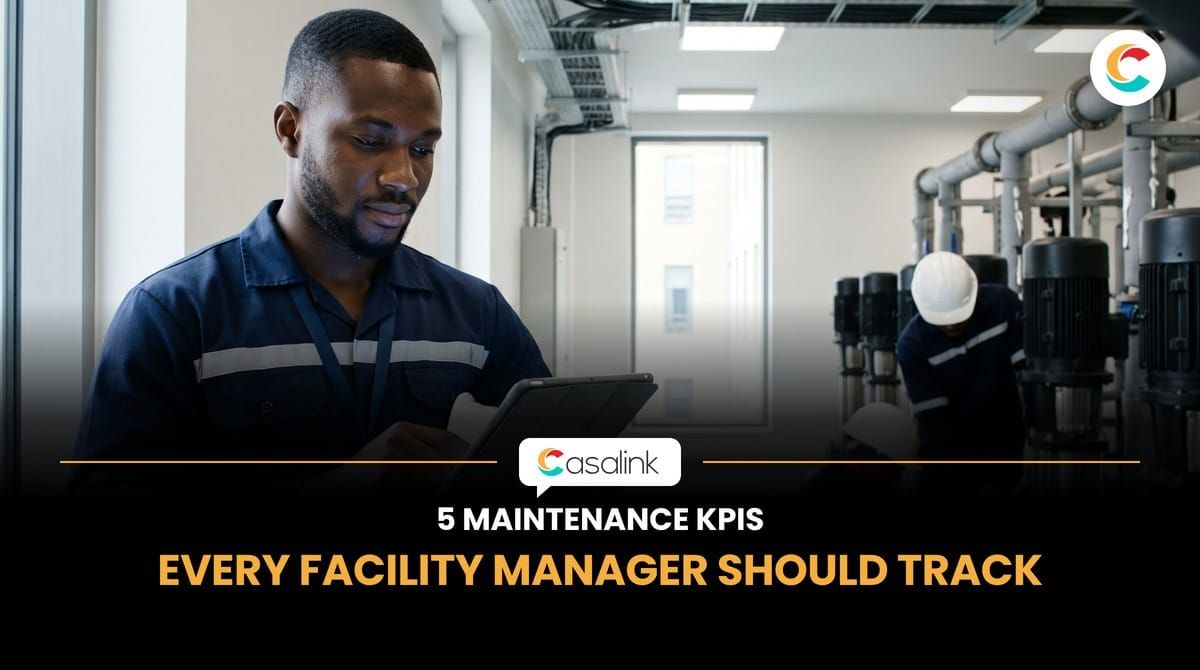
Three technicians work together to repair one faulty pump. At the end of the job, each technician logs the repair as a completed task.
By the end of the month, the maintenance report shows three jobs completed. But the team only repaired one pump.
On paper, the numbers look good. In reality, they tell a different story.
This is one of the problems with measuring maintenance performance using numbers alone. A report can show how many jobs were raised and closed, but if the records are inaccurate, those figures may not reflect the actual work carried out.
For facility managers responsible for buildings in banks, hospitals, schools and other large organisations, maintenance reports should provide more than a list of completed tasks. They should show how well the team is responding to faults, keeping equipment in good condition and managing outstanding work.
That is where maintenance KPIs come in.
Why Maintenance Reports Don't Always Tell the Full Story
A maintenance report is only as reliable as the records behind it. When different team members use separate systems or record the same job more than once, the figures can quickly become misleading.
There are a few common reasons this happens:
- One job becomes several tickets: Multiple technicians record the same repair separately, making the team's completed jobs appear higher than they are.
- Closed does not always mean completed: A work order may be marked as closed without confirming that the reported fault has been resolved.
- Different systems show different figures: When maintenance requests and performance records are kept separately, the numbers may not match.
The result is a report that looks complete but does not give management an accurate picture of maintenance performance.
To avoid this, facility managers need to track the right KPIs and make sure the information used to calculate them is reliable.
5 Maintenance KPIs to Track
You do not need dozens of metrics to understand how your maintenance team is performing. These five provide a useful starting point.
1. First-Time Fix Rate
How often does your team resolve a fault on the first visit?
The first-time fix rate measures the percentage of maintenance jobs completed without requiring another visit to resolve the same issue.
A low rate may point to problems with fault diagnosis, unavailable spare parts, or repairs that do not address the underlying issue.
How to measure it: Divide the number of jobs resolved on the first visit by the total number of completed repair jobs, then multiply by 100.
2. Average Time to Close
How long does it take your team to resolve a reported maintenance issue?
This KPI measures the time between when a maintenance request is reported and when the work is completed. It helps facility managers understand how quickly their teams respond to faults and whether certain issues are taking longer than expected.
For example, a faulty generator may require a faster response than a minor cosmetic repair. Tracking resolution time by job priority can help managers identify where delays need attention.
How to measure it: Add the time taken to resolve completed requests and divide by the number of completed requests.
3. Preventive Maintenance Completed on Time
Are scheduled maintenance activities being carried out when they are due?
Preventive maintenance helps reduce unexpected breakdowns, but having a schedule is not enough. Facility managers also need to know whether inspections, servicing, and routine maintenance are happening as planned.
A low completion rate may mean the team is spending too much time responding to urgent faults or that scheduled tasks are being pushed aside.
How to measure it: Divide the number of scheduled maintenance tasks completed on time by the total number of tasks due, then multiply by 100.
4. Repeat Faults
Are the same assets developing the same problems repeatedly?
When equipment keeps breaking down after repairs, it may be a sign that the underlying problem has not been properly addressed.
Tracking repeat faults helps facility managers identify equipment that needs closer attention and review whether previous repairs have been effective.
It also helps teams avoid treating every new report as an isolated issue when the same fault may have occurred before.
5. Maintenance Backlog
How much maintenance work is still waiting to be completed?
The maintenance backlog includes open work orders that have not yet been resolved. A growing backlog may indicate that requests are coming in faster than the team can handle them, or that delays in approvals, parts, or resources are affecting progress.
Facility managers should monitor the number of outstanding jobs, how long they have been open, and which ones have passed their due dates.
This makes it easier to identify jobs that need attention before they become bigger operational problems.
How to Keep Your Maintenance Records Accurate
Tracking these KPIs is only useful when the information behind them is reliable. Before sending a monthly report to management, facility teams should make sure that:
- Every maintenance job has one work order, even when several technicians are involved.
- The technicians working on the same job are recorded under that work order.
- Work orders are updated as repairs progress.
- Completed jobs have supporting records, such as photos and maintenance notes, where relevant.
- A job is not marked as completed without the required checks and sign-off.
These steps help prevent duplicate entries, make it easier to identify repeat faults and give managers a more accurate picture of the work carried out.
How Casalink Helps Facility Teams Track Maintenance Work
Keeping track of maintenance requests, assigned technicians, and completed repairs can become difficult when information is spread across emails, spreadsheets, and different communication channels.
Casalink gives facility teams a central place to record maintenance requests, create and manage work orders, assign jobs and track their status. Teams can also keep supporting records, including photos, so there is information to refer to when reviewing completed work.
For facility managers, having these records organised makes it easier to follow outstanding jobs, review previous maintenance activities and assess the information behind monthly reports.
Because good maintenance reporting starts with knowing what work was actually carried out, who handled it and what happened afterwards.
Frequently asked questions
What are the most important maintenance KPIs?
Five maintenance KPIs cover most needs: first-time fix rate, average time to close, preventive maintenance completed on time, repeat faults and maintenance backlog. Together they show how fast faults are fixed, whether repairs last, and whether planned work happens. Track them by site and by type of asset. Avoid counting "total tickets closed" on its own, because it rewards logging rather than fixing.
How do you measure facility maintenance performance?
Start with accurate records. Each fault should have one work order, with every technician who worked on it recorded under that same order. Close it only after supporting records, such as photos, and a named sign-off. Then measure time to close, first-time fixes, preventive maintenance done on time and repeat faults each month. Accurate records give you numbers you can defend.
How do you stop duplicate work orders?
Set one rule: one fault, one work order. The first person to report it creates it, and everyone else is added to it. When several technicians work on one job, record them all under the same work order instead of letting each log their own. A system that shows open work orders by asset makes duplicates easy to spot.
Why does closed not always mean done?
In many helpdesks, anyone can mark a work order as closed, and nobody checks the work first. The fix is simple: close a work order only when photos show the finished work against your standard and a named supervisor or facility manager approves it. Then a closed job is a checked job.
Want to explore your options? Book a 15-minute demo to learn more about Casalink.
Want to read more first? Browse our guides and resources.