How Smart Property Managers Are Using Technology to Prove Their Value (...and Get Paid What They’re Worth)

It’s 10:47 PM on a Tuesday. Your phone has buzzed 38 times since dinner. Flat 4B says the water pump isn’t working. The chairman of the estate association is asking, again, for a “breakdown of where the diesel money went.” A plumber you sent to Block C two days ago still hasn’t sent you the receipt. And somewhere in your WhatsApp, buried between voice notes and forwarded prayers, is the photo the electrician sent of the “completed” repair that you haven’t had time to check.
Sound familiar?
If you manage properties in Nigeria, whether it’s a serviced estate in Lekki, a block of flats in Abuja, or a gated community in Port Harcourt, you already know that this job is one of the most demanding, least understood, and most unfairly questioned roles in real estate. You’re not just managing buildings. You’re managing power supply, water systems, contractors, and resident expectations; all while being treated like the prime suspect every time something goes wrong.
This post is for you. Not the property owner. Not the investor. You, the person on the ground, doing the work, fighting to keep the buildings running while everyone assumes the worst about where the money goes.
We’re going to talk about why the current system works against you, what’s changing in the industry, and how the smartest property managers are using technology to move from “defend yourself” to “here’s the proof.”
The System Is Broken (And It’s Not Your Fault)
Let’s be honest about what property management in Nigeria actually looks like today.
A resident reports a faulty socket via WhatsApp. You screenshot the message, forward it to your electrician’s WhatsApp. He says he’ll come Thursday. Thursday becomes Saturday. When he finally shows up, he fixes it and sends you a blurry photo. You forward the photo to the resident. The resident says “okay.” You make a mental note to pay the electrician. Two weeks later, you try to sort out your expenses in Excel and realise you have no receipt, no before-and-after record, and no way to prove the job was done properly.
Now multiply that by 50 units, 12 vendors, and 30 maintenance tasks a month.
The tools you’re working with were never designed for this. WhatsApp is for chatting, not tracking work orders. Excel doesn’t connect payments to tasks. Bank transfer receipts don’t prove that work was actually completed. And paper logbooks can’t defend you in an EXCO meeting when the chairman asks why the generator consumed 4,000 litres last month.
|
The “Invisible Work” Problem Maintenance
is invisible by nature. When a facility manager says they serviced the
generator or cleared the drainage, there’s often no physical evidence beyond
an invoice. In Nigeria, this doesn’t just create confusion; it leads to
direct accusations of fraud against the very people keeping buildings
running. |
The result? Even honest, hardworking property managers operate under constant suspicion. You’re assumed guilty until proven innocent, except nobody gave you the tools to prove your innocence in the first place.
The Three Battles Every Property Manager Is Fighting
Across dozens of conversations with facility managers in Lagos, Abuja, and Port Harcourt, the same three struggles come up again and again:
Battle #1: The Service Charge Boycott
Residents refuse to pay service charges because they don’t see value. “The generator is always breaking down.” “The pool is dirty.” “Where is the money going?” It doesn’t matter that you serviced the generator twice last month and the pool pump failed because of a power surge. Without a documented, visual record of every task you completed, every litre of diesel purchased, and every vendor paid, you have no proof in that argument. You’re defending with words against accusations that demand evidence.
Battle #2: The WhatsApp Overload
Your entire operation runs through a group chat. Requests come in at all hours. Photos get buried. Voice notes can’t be searched. You can’t sort by priority, by unit, or by status. When a resident asks “what happened with my complaint from last week?” you have to scroll through 200 messages to find it. And if you changed phones or your chat history was cleared? That information is gone for good.
Battle #3: The Trust Problem
This is the deepest wound. Diesel is the single largest line item in most serviced estates, sometimes 40% of the total service charge. And diesel fraud is so common that residents assume it’s happening by default. Short deliveries, siphoning, inflated invoices; these are real problems in the industry. But they’ve created a situation where every facility manager is presumed guilty, regardless of whether they’re actually honest.
You can’t fight a trust problem with more WhatsApp messages. You need a system that generates proof on its own, so the evidence speaks for itself without you having to beg anyone to believe you.
What “Proof” Actually Looks Like in 2026
Here’s where the industry is moving, and where the opportunity lies for property managers who want to stay ahead.
The old version of proof was a paper receipt and a verbal report. The new version is a digital record that’s created automatically as work happens, not put together after the fact by someone scrambling to justify expenses before a meeting.
This is what a modern maintenance workflow looks like, compared to what most of us are still doing:
|
Step |
The Old Way |
The New Standard |
|
1. Report |
Resident
sends a WhatsApp message at 11 PM |
Resident submits a
structured request with a photo, in three clicks |
|
2. Assign |
FM forwards
to contractor’s personal WhatsApp |
FM assigns from a vetted
contractor list; contractor gets a proper task notification |
|
3. Execute |
Contractor
does the work (maybe), sends a blurry photo (maybe) |
Contractor uploads
location-tagged, time-stamped before-and-after photos through the platform |
|
4. Verify |
FM glances at
the photo and trusts it happened |
AI checks the photos
against the task requirements, flags anything that looks off, and confirms
completion |
|
5. Pay |
FM does a
bank transfer, hopes to sort it out later |
Payment releases
automatically once verification passes, linked directly to the work order |
|
6. Report |
FM scrambles
to build an Excel summary before the EXCO meeting |
The dashboard generates
performance reports automatically, with visual evidence for every task |
Notice the shift. In the old system, the property manager is the bottleneck and the scapegoat. In the new system, they’re the person in control, backed by data that proves every decision they made.
The Diesel Question (And How to Answer It Once and For All)
Let’s address the elephant in every EXCO meeting: diesel.
You know the accusation before it’s even made. “We spent ₦3.2 million on diesel last quarter, but the generator is still only running 14 hours a day. Where is the fuel going?”
Right now, most facility managers defend themselves with suppliers’ delivery notes and handwritten logbooks. The problem is obvious: these documents are easy to fake, easy to lose, and impossible to cross-check.
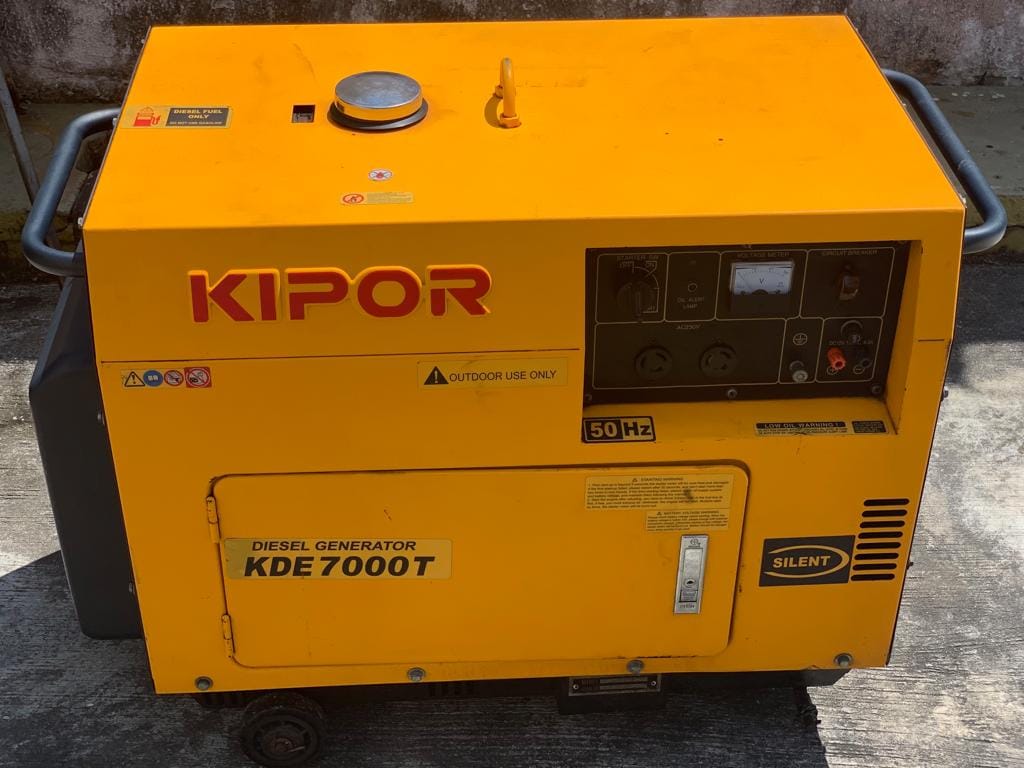
Modern property management platforms are solving this with a combination of three tools:
1. Photo verification of fuel gauge readings. A location-tagged, time-stamped photo of the generator’s fuel gauge before and after every delivery. AI reads the gauge numbers automatically, so they can’t be changed after the fact.
2. Hour-meter tracking. Daily readings of the generator’s run hours, logged through the same platform. This creates a simple calculation: if your generator uses 25 litres per hour and ran for 300 hours this month, total usage should be about 7,500 litres. If the delivery records show 9,000 litres, the system flags that gap automatically.
3. Automatic alerts for unusual patterns. If the fuel usage suddenly spikes, or if deliveries don’t match run hours, the system tells you before the EXCO has to ask.
|
What This Means for You You stop
being the person who has to explain where diesel went. You become the person
who built the system that tracks it automatically. The conversation at the
EXCO meeting changes from “Why should we trust you?” to “Show us the
dashboard.” |
Why International Software Doesn’t Solve This
You might be thinking: “There’s already property management software out there. AppFolio, Buildium, Yardi. Why not just use one of those?”
The short answer: they were built for a world that assumes constant electricity, piped water, and contractors who send invoices through accounting software. They have no idea what diesel tracking is. They don’t know what a borehole maintenance schedule looks like. And they don’t understand that your “property management” job is actually closer to running a utility company.
Managing property in Lagos is not the same as managing a flat in London or a condo in New York. Your buildings generate their own power. They source and treat their own water. They run their own security. The software you use should understand that, not force you to make workarounds in a system designed for a completely different reality.
This is also why the Excel-and-WhatsApp approach falls apart. It’s not that you’re disorganised. It’s that you’re trying to run a complex operation with tools that were built for something else entirely.
What Smart Property Managers Are Doing Differently
The facility managers who are getting ahead in this industry share one thing in common. They’re not working harder; they’re building systems that create proof as part of the normal workflow.
Here’s what that looks like in practice:
• Every maintenance request comes through a structured system, not a group chat. The request has a timestamp, a category, a photo, and a priority level. It can be tracked, filtered, and reported on.
• Every contractor interaction is on record. Assignment, execution, completion photos, and payment are all connected in one place. No more scrolling through WhatsApp to prove you sent the plumber.
• Every payment ties back to a verified task. When money leaves the account, there’s a photo trail, an AI verification stamp, and a task record that explains exactly what it paid for.
• Reports write themselves. No more late nights before the EXCO meeting putting together slides. The data is already organised, visual, and ready to present, because it was captured correctly from the start.
This isn’t about surveillance. It’s about running a professional operation. The same way an accountant uses accounting software, not because anyone suspects fraud, but because that’s how professionals work. A property manager uses operations software because managing 50 units across multiple vendors deserves better than a group chat.
The Payoff: From Suspect to Indispensable
Here’s what changes when you operate this way:
Service charge collection improves. When residents can see a clear record of what their money paid for, with photos, timestamps, and verified completion, the “where is our money going?” objection fades away. You’re no longer asking them to trust you. You’re showing them the receipts.
Your reputation grows. Every verified task is a point in your favour. Over time, you build a track record based on measurable results, not charm or personal relationships. That makes you harder to replace and easier to recommend.
Contractor relationships get cleaner. When contractors know their work will be checked by AI before payment goes through, the quality goes up. And when payment releases automatically once verification passes, they stop chasing you for money. You’re no longer the person holding the purse; you’re the one managing the process.
You get your evenings back. The 10:47 PM WhatsApp messages won’t disappear overnight. But when requests come through a proper system instead of a group chat, you can sort by priority, assign by category, and actually switch off for the night knowing that nothing important will get lost.
This Is What Casalink Was Built For
Casalink is a property management platform built specifically for the realities of managing property in Nigeria and across emerging markets. Not an international tool adapted for your market. Not a rent collection app with a maintenance feature added on. A purpose-built system that understands diesel tracking, contractor verification, borehole schedules, and the daily operational pressure that defines your job.
It was built around a simple idea: the property manager should be the hero of this story, not the suspect. Every feature, from AI-verified task completion to automated financial reporting to a Building Health Score that measures your impact, exists to give you the tools to prove your value in a way that no WhatsApp voice note ever could.
If you’re a facility manager who’s tired of defending yourself with paper receipts, or a property owner looking for a way to build real transparency with your management team, Casalink was built for exactly this.
Ready to Prove Your Value? Book a demo at casalink.app
Show your EXCO the dashboard, not excuses.