
More Cameras Won’t Save Your Cement. Tracking Building Materials on Site Will.
Cameras on every corner, and the cement still runs out early. How to track building materials on site by recording delivered, issued, used and on hand.
The site has cameras on every corner, two guards on duty, and a gate that stays locked every night, yet the cement keeps running out earlier than expected.
If you want to track building materials on site, the answer may not be another camera. It may be better records.
The site is in Lagos, while the developer is in Abuja managing another project. His phone buzzes on WhatsApp. It is the site lead.
“Oga, cement has finished. We need 80 bags today, or the block crew will stop.”
He scrolls up. Three weeks ago, he paid for 400 bags. The waybill said 400, and the storekeeper recorded the delivery. The block work looks about halfway done.
He checks the camera footage, but nobody came in at night. The guards agree.
So where did the cement go?
He sends the money because the work cannot stop, but the question stays with him.
The problem is not always what happens at the gate. It is what happens between delivery, storage, use, and the next stock count.
Quick answer: How do you track building materials on site?
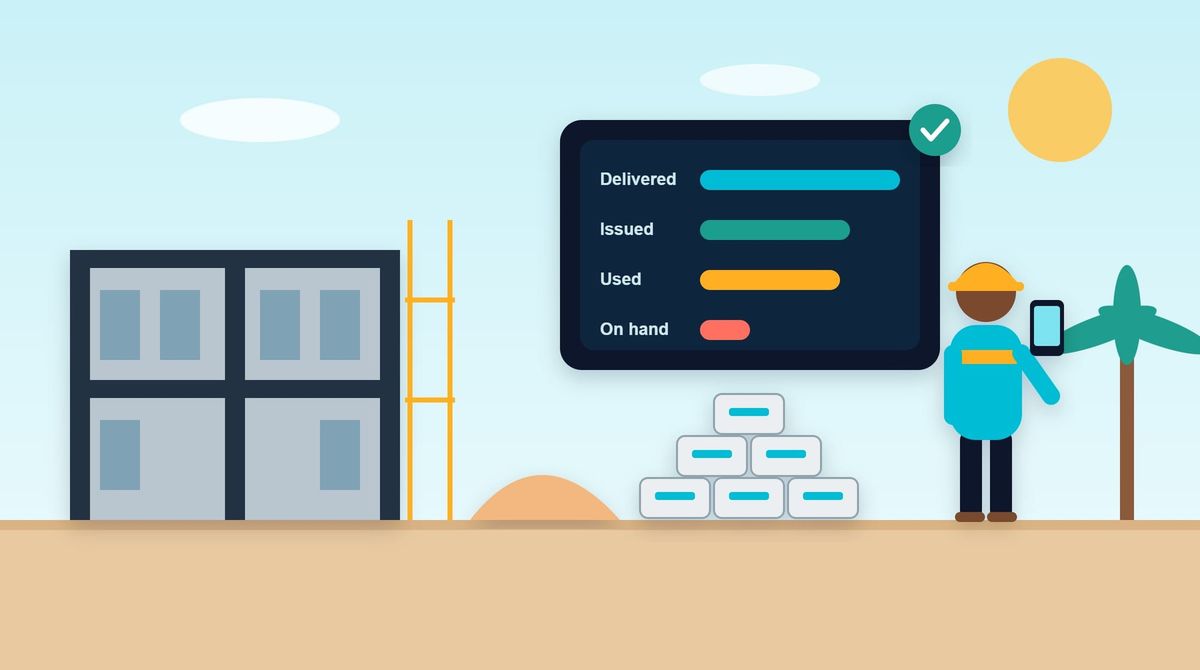
To track building materials on site, record each material at four points:
- Delivered: What arrived at the site?
- Issued: What left the store, and who received it?
- Used: What was used for the work?
- On hand: What remains in stock? What’s the monetary value?
Compare these records regularly. The differences can help you identify where to investigate, whether the issue is an incorrect delivery, an unrecorded issue, damage, waste, or a stock-count error.
Why do building materials go missing on site?
Many builders think of missing materials as a gate problem, so they add guards, lights, and cameras.
Cameras can help monitor access, but they do not replace accurate material records. A camera may show a delivery entering the site without confirming the quantity received or how much was later issued.
Here are some common points where material records can fall short.
1. The short delivery
The supplier says the full order has arrived, but the quantity received does not match the waybill or purchase order.
Without a proper count at delivery, the difference may go unnoticed.
2. The unclear stockpile
Sand, gravel, and other bulk materials can be difficult to estimate by sight. A pile may look larger or smaller than it is, making it harder to confirm quantities without an agreed method of measurement.
3. The unrecorded issue
Materials leave the store for “the block crew,” but nobody records the quantity, date, or person receiving them.
The store balance becomes unreliable, and the project manager has less information to work with when more materials are requested.
4. The unrecorded waste
Materials can be damaged by rain, poor storage, handling, or mistakes during work. If the damage or waste is not recorded, it becomes difficult to understand why the stock balance has changed.
These issues do not automatically mean someone is stealing. Construction teams are busy, and records can be missed when the process is difficult to maintain.
The system should make it easier for the team to record what happens, not add unnecessary paperwork.
Small leaks add up. The ACFE’s 2024 Report to the Nations, a global study across industries, estimates that organisations lose about 5% of revenue each year to leaks like stolen stock and padded bills. This is a global estimate, not a construction-only figure.
How do you track building materials on site?
Counting a delivery is only the beginning. The records need to stay useful throughout the project.
Here is a simple site-store routine that construction teams can follow.
1. Record every delivery
Check each delivery against the purchase order and waybill. Record the quantity received and document any difference before accepting the delivery as complete.
Where useful, take a photo of the materials and supporting delivery documents.
2. Record every issue from the store
Materials should not leave the store without a record of the quantity, date, and crew or person receiving them.
This helps the storekeeper maintain an accurate stock balance and gives the project manager a record to refer to when questions come up.
3. Record material use
Keep track of the materials used for each stage of work. The method will depend on the material and the project.
For example, cement used for blockwork can be reviewed alongside the work completed and the project’s expected material requirements.
4. Record waste and damage
Agree on reasonable waste allowances for each material and project stage. Record damaged or wasted materials rather than allowing them to disappear from the stock balance without explanation.
5. Count what remains
Carry out regular stock checks. For bulk materials, use a consistent measurement method. Dated photos can also help document the condition and location of stockpiles.
6. Compare the records
Review what was delivered, what was issued, what was used, and what remains.
When the numbers do not agree, the team has a clearer starting point for checking the relevant delivery, store issue, or stock count.
Can you track a building site from abroad?
Yes. Many property owners live in London, Houston, or Calgary while their projects are underway in Nigeria, and developers may also manage several sites across different cities.
Site visits can help, but they only show what is happening during the visit. They do not provide a record of every delivery, material issue, or stock count between visits.
What helps is having consistent records that the site team can maintain and the owner or project manager can review remotely.
For owners managing construction from abroad, the goal is not to replace the site team. It is to have reliable information to support questions, approvals, and follow-ups without needing to be physically present for every decision.
How Casalink can help with construction material management
A material request comes in; the storekeeper needs to check what is available, and the project manager needs to review what has been requested and approved. When materials arrive, the team needs to check the delivery and keep a record.
Casalink supports construction teams with digital records for material requests, approvals, and delivery checks.
Here is how that can support the process:
Keep material requests and approvals recorded
Teams can record material requests and manage the approval process, rather than relying only on scattered messages and verbal updates.
Keep delivery checks and records together
When materials arrive, teams can document delivery details and check them against the relevant records. This makes it easier to review a delivery later if a discrepancy is raised.
Keep track of stock and material movement
Accurate inventory records help teams review what has been received, issued, and remains available. The quality of those records depends on the team consistently recording material movement.
Review site information remotely
For owners and project managers who are not always on site, digital records can make it easier to review requests, delivery details and other updates from their phone.
The aim is to make material records easier to maintain and easier to check, without creating unnecessary work for the site team.
Who benefits from better construction material records?
The developer
The developer has a clearer record to review before responding to another material request. If the numbers agree, the request can move forward with less back-and-forth. If they do not, the developer can ask a more specific question.
The client funding the build
The client has records to refer to when reviewing project updates and material use. This supports clearer conversations about what was delivered and how the project is progressing.
The site lead
The site lead has a record of deliveries, material issues, and stock checks. When a supplier, storekeeper or project manager raises a question, the team has information to work with.
Good site leads already understand the value of keeping records. The right process makes those records easier to maintain and share.
Frequently asked questions
How do I stop building materials from going missing on site?
Start by recording each material at delivery, when it leaves the store, when it is used, and when stock is counted. Record every issue against a date and the crew or person receiving it. Carry out regular stock checks and investigate differences between the records.
Guards and cameras can help monitor site access, but they do not replace material tracking.
What records should a site storekeeper keep?
A site storekeeper should maintain delivery records matched to waybills and purchase orders, issue records showing what left the store and who received it, and a running stock balance. Regular stock counts and records of damaged or wasted materials also help explain changes in stock.
How can I monitor my building project from abroad?
Ask for consistent records, not just occasional progress photos. Depending on the project, these may include material deliveries, store issues, stock balances, worker attendance, and completed work.
A digital system can help the site team maintain records and make relevant updates available to the owner or project manager remotely.
How do I count workers on a busy construction site?
Use a consistent attendance process, such as a QR badge or another recorded sign-in method. Maintain a worker roster and make sure temporary or casual workers are included in the process.
Attendance records can support site coordination and help teams review who was present on a given day.
See how Casalink can support your construction site
Bring one site and one material you want to track, such as cement, blocks, or rods.
In a construction walkthrough, the Casalink team can show you how material requests, delivery checks, and records can be managed in the platform.
Casalink also comes with 60 days of hands-on onboarding, so your team has support while getting started. See how it works
The dry season is a busy period for construction. Before the next major delivery arrives, review how your site records materials from delivery to stock count.
P.S. If you build one house a year and are on site every day, a notebook and a consistent process may be enough. If you manage several sites or build from a distance, reliable digital records can make it easier to follow what is happening.
And when your building is ready for handover, the next important set of records will be the estate’s service charge statement.